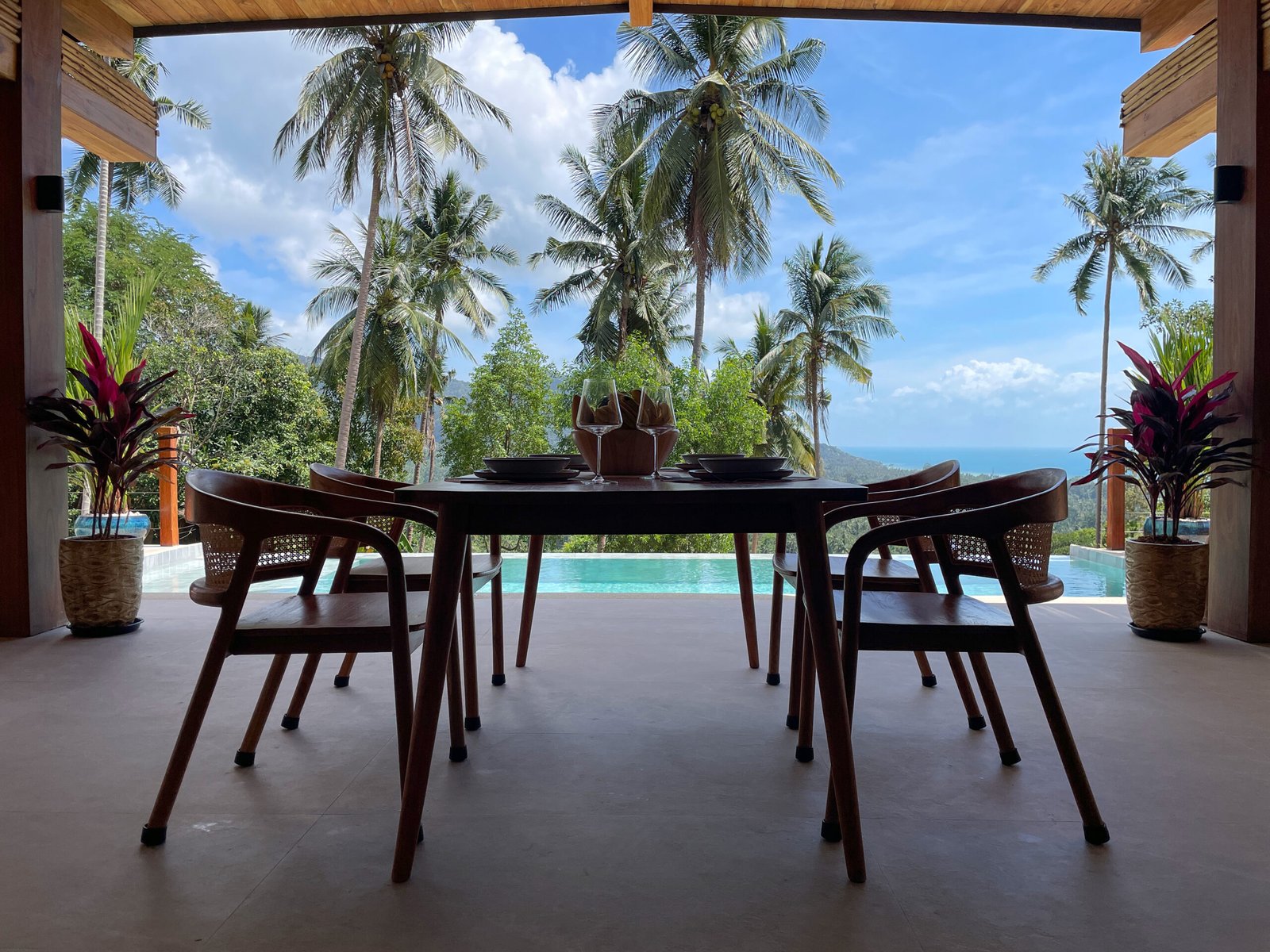
Best Time to Visit Villa Altura
Many travellers search for the best time to visit Koh Phangan. The truth is, it depends entirely on the kind of stay you’re looking for. The island doesn’t really have one season. It has four, each with its own light, its own rhythm, its own reasons to come. Here’s how the villa lives through the year.
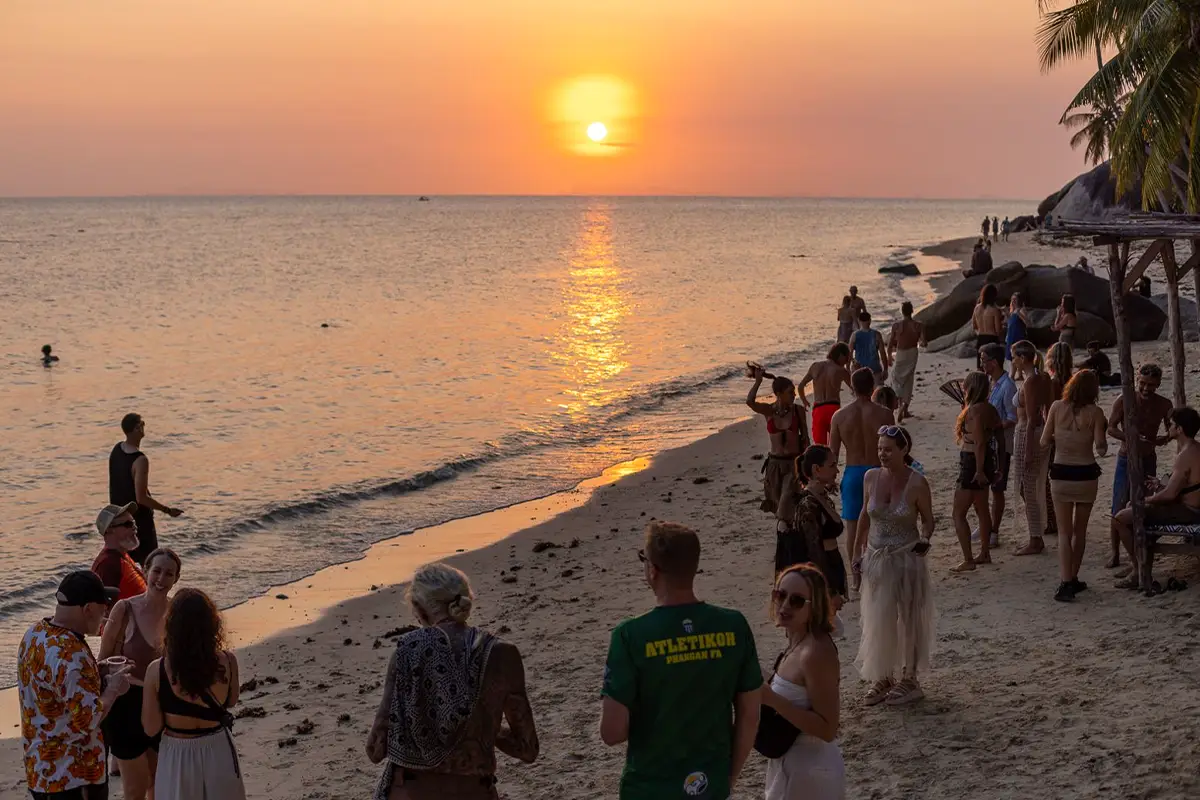
The cool season.
This is the island at its most reliable, most of the time. Mornings start cool enough for a blanket, and the terrace catches sun from breakfast well into the afternoon. The pool turns the kind of blue that doesn’t need filtering for photos. Skies are generally clear, though haze and the occasional cloudy spell can soften the light from time to time. From the villa itself, set back from the coast, sunsets aren’t really part of the view in any case; what you get instead is the long, golden light of the afternoon settling over the hillside.
It’s also when most people choose to come, which means the island has more life to it, and the villa is booked furthest in advance. If you want the postcard version of Koh Phangan, this is it.
The warm season.
The heat arrives properly in April, and with it, the sea reaches its warmest point of the year, closer to bath temperature than swimming pool. The jungle around the villa thickens, greener than the dry months, and everything slows down. This is, by far, the quietest stretch of the calendar: very few visitors, the same clear skies as December to March, and an island that feels like it belongs to you. The beaches and trails are quieter too: the whole island breathes differently.
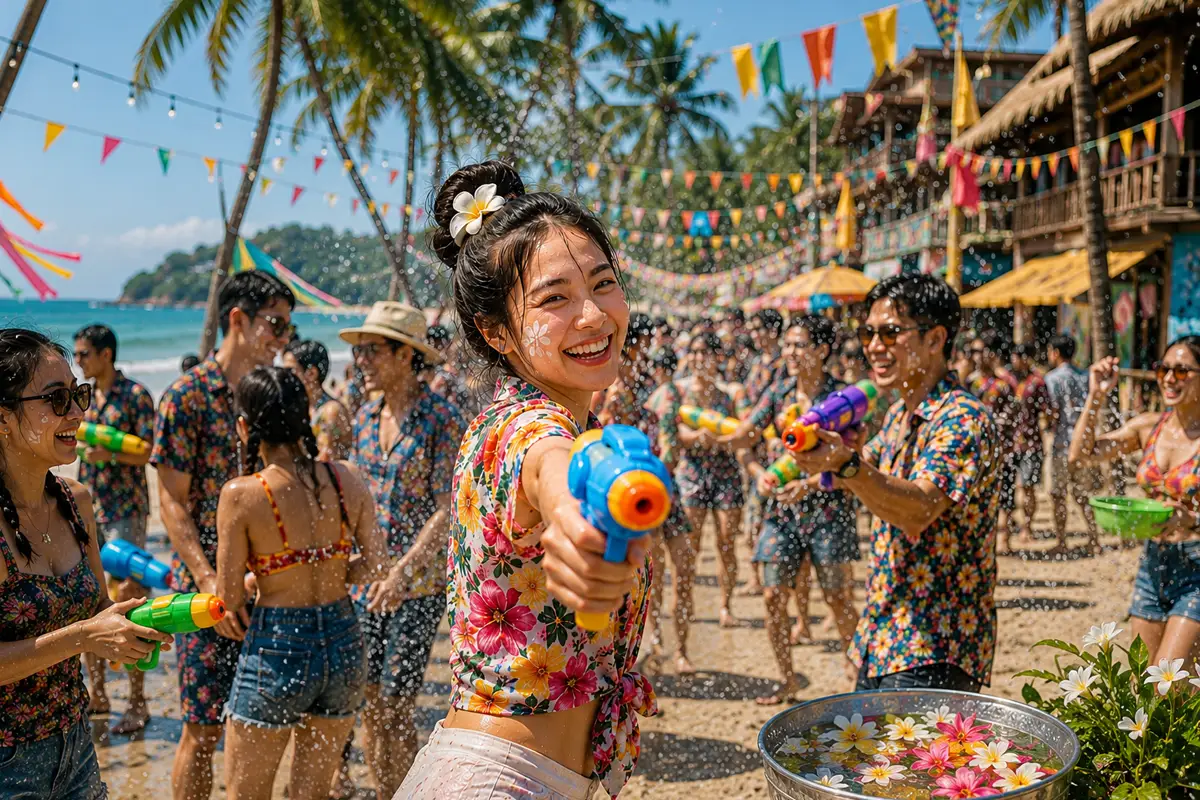
One day breaks the pattern: April 13th, Songkran. Thailand’s New Year fills the streets with water, colour and a kind of collective joy that’s rare to find anywhere: spontaneous, warm, entirely good-natured. It’s the sort of thing that’s difficult to describe in advance and impossible to regret. The morning after, the island returns to itself, and the villa is waiting.
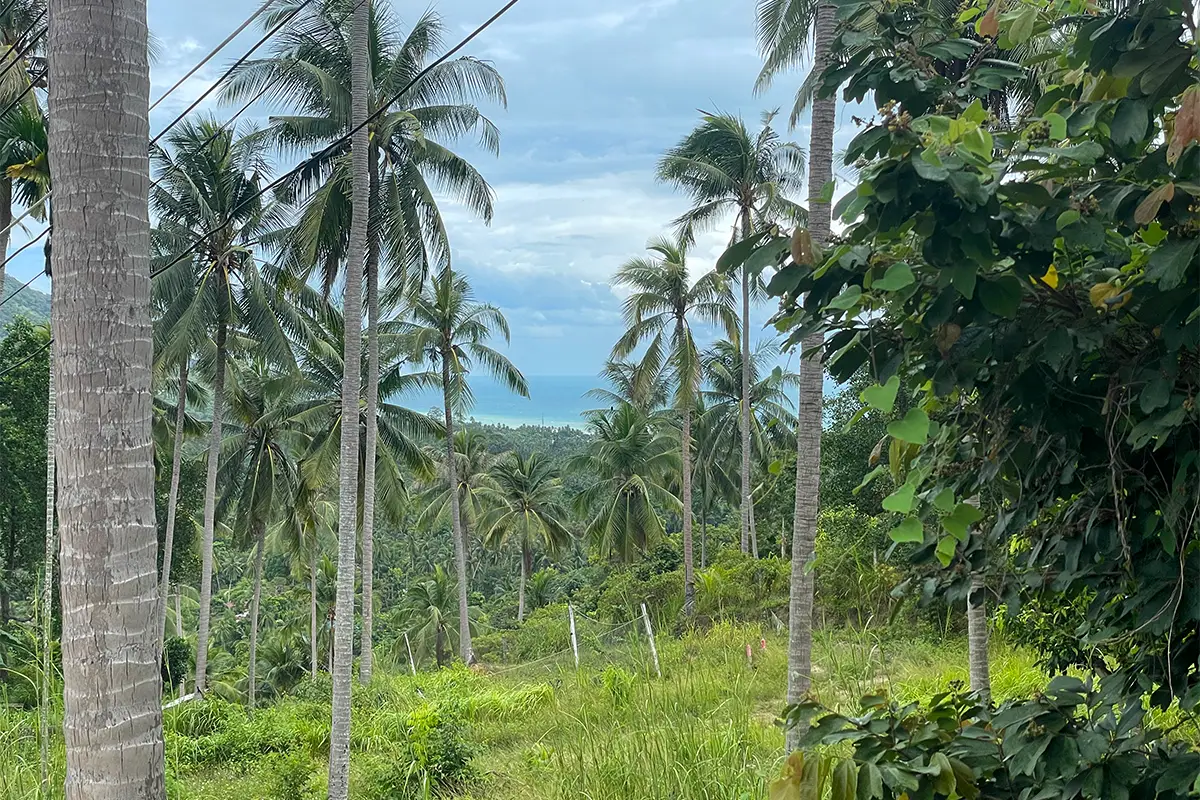
The overlooked season.
Most people planning a trip to Thailand assume July to September means rainy season, full stop. The island stays warm, and the weather here is often noticeably kinder than what’s happening at the same time in Phuket or Krabi, on the other side of the country. Rain does come, but rarely for a full day. A downpour moves through, the sky clears, and the afternoon carries on. It’s also when many families choose to travel, school holidays lining up neatly with a window of weather that’s better than its reputation.
It’s the overlooked stretch of the Koh Phangan calendar: a season that gets dismissed by guidebooks writing about somewhere else.
The green season.
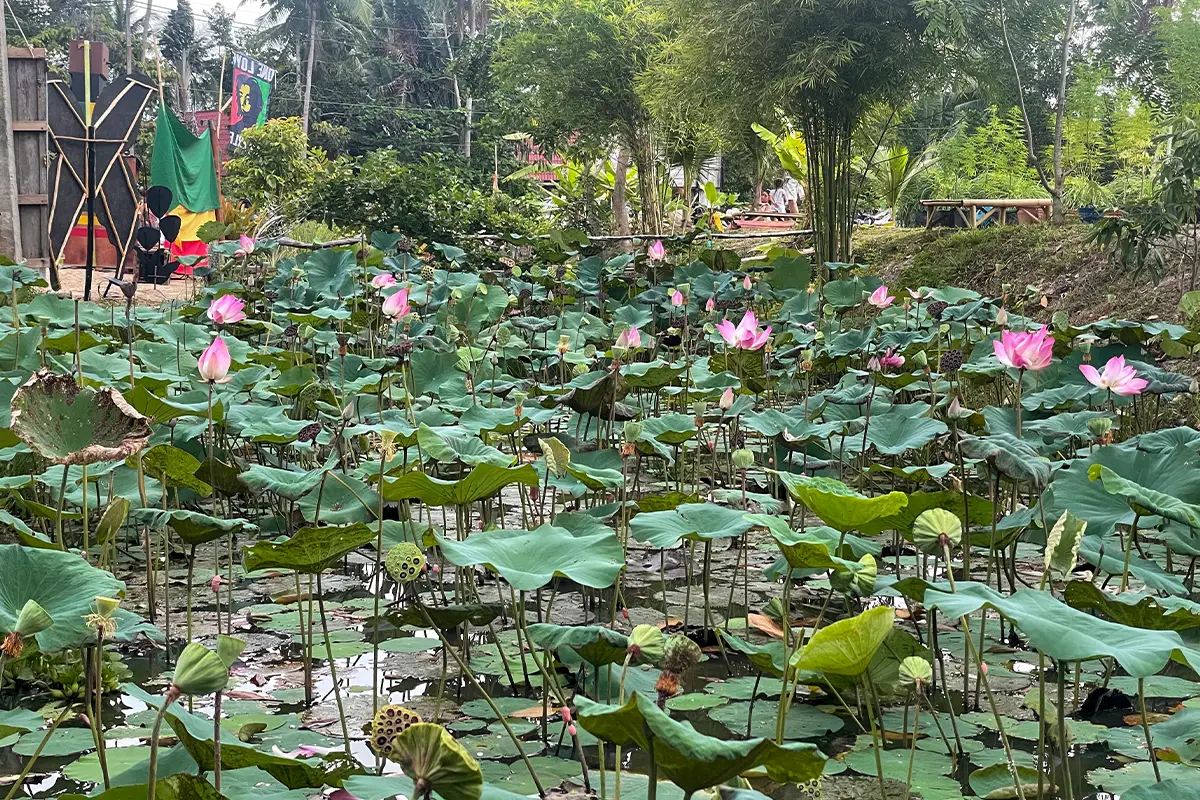
This is the island’s rainiest stretch, and some years it runs a little late, drifting into January. Afternoons can bring real downpours, sometimes for hours.
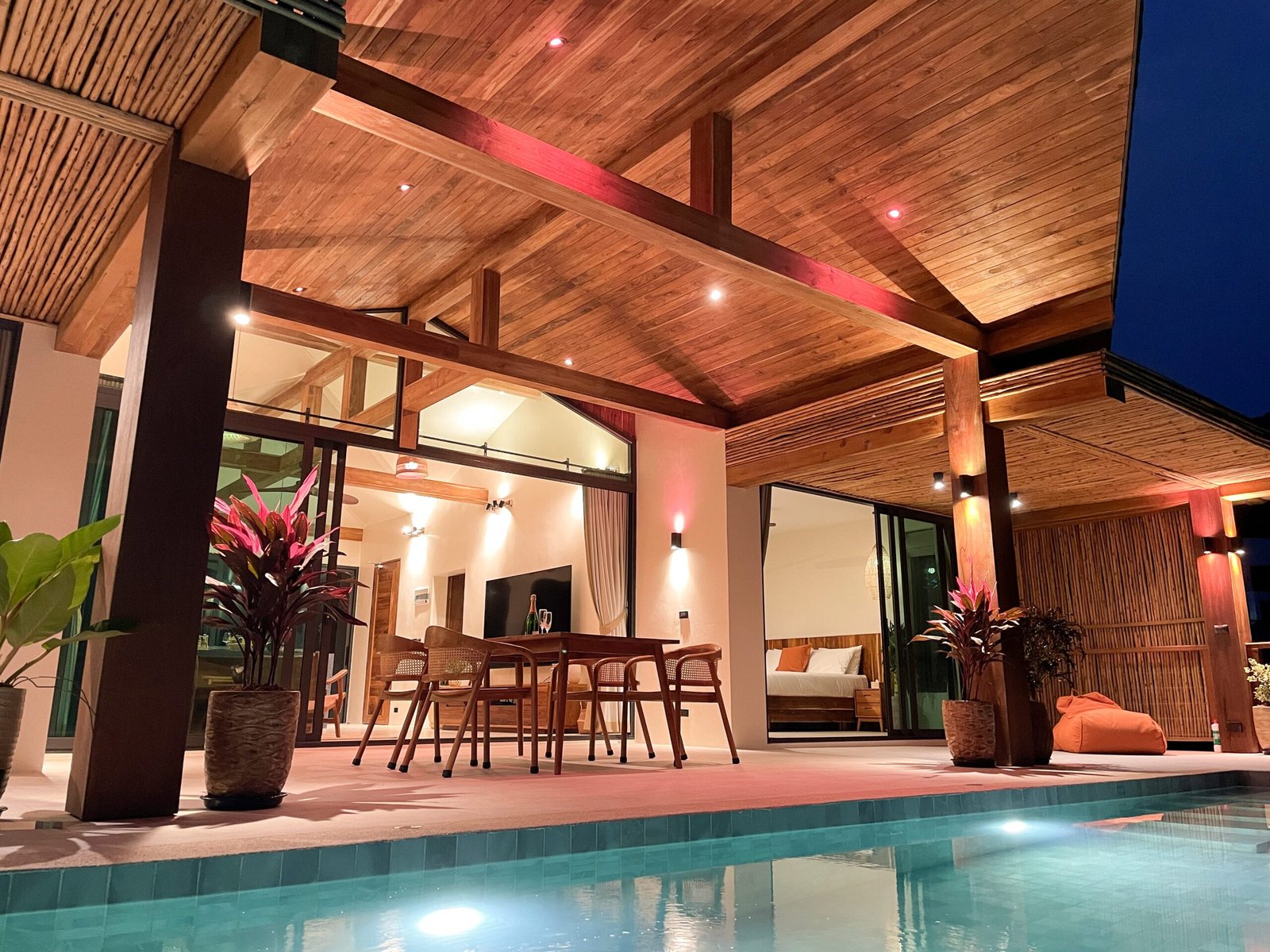
We’ve never seen it as a season to avoid. The hillside turns a deeper green than at any other time of year, the light through the rain has its own quality, and the outdoor terrace, 110 m², covered by a deep, generous roof, means you can sit through most of what the sky brings without going anywhere. Coffee in hand, watching the rain move across the valley below, is its own kind of morning. Only the rare, heavier storm sends everyone inside.
| Period | Weather | Who it’s for |
|---|---|---|
| Dec – Mar | Clear skies, cooler nights | First-time visitors, the busiest months |
| Apr – Jun | Hot, warmest sea of the year | Those who want quiet: the calmest months on the island |
| Jul – Sep | Warm, short afternoon showers | Families, flexible travellers |
| Mid-Oct – Mid-Dec | Rainy season, can run into January | Green scenery, quiet, terrace weather |
| Month | Temperature | Weather |
|---|---|---|
| January | 25–29 °C | Pleasant and mild. Some rain is still possible, mostly early in the month. |
| February | 25–30 °C | Mostly sunny, with the odd shower. One of the most pleasant months of the year. |
| March | 26–32 °C | The heat builds. Plenty of sunshine and, as a rule, little rain. |
| April | 27–33 °C | Very hot and often sunny, with the occasional tropical storm. |
| May | 27–33 °C | Hot and humid, sunshine alternating with tropical showers. |
| June | 27–32 °C | Hot and humid, with bright spells and showers that usually pass quickly. |
| July | 26–32 °C | Generally pleasant: sunny days and a few showers, often in the evening. |
| August | 26–32 °C | Warm and often sunny. Occasional showers, mostly late in the day. |
| September | 26–31 °C | Still many fine days, but more humid, with evening showers more often. |
| October | 25–31 °C | The turn towards the rainy season: more frequent, sometimes heavy rain. |
| November | 24–30 °C | Usually the wettest month. Heavy downpours, but rarely all day. Bright spells are common. |
| December | 24–29 °C | Rain still possible, generally easing towards the end of the month. |
Temperatures are indicative and reflect typical conditions. How warm it feels depends a great deal on humidity, which also shifts through the year: the same 30 °C feels very different on a dry February afternoon and a humid day in May. Tropical weather also varies from one year to the next. Official climate data: Thai Meteorological Department.
Patterns, not promises.
The past few years have made that clearer than ever: a string of clear, dry days can show up in the middle of the rainy season, just as a week of unsettled weather can land in the middle of March. The sky here doesn’t always read the script.
What we can promise is simpler: whatever the weather does during your stay, the villa has a way of making it work. Rain becomes something to watch from a covered terrace. Heat becomes a reason to stay by the pool a little longer. There isn’t really a wrong month, only a different version of the same place. When you’re ready, check availability for your dates.
There isn’t a wrong time to be here.
Only a different one. Tell us what you’re looking for, and we’ll tell you honestly whether this is your month.