Working Remotely from Koh Phangan: What If It Simply Meant Staying a Little Longer?
For a long time, travelling far away meant truly switching off from work. A week in Thailand was a week of holiday. When it was over, you went home.
For many travellers, that is no longer entirely true.
You do not need to become a digital nomad, travel with your whole life in a backpack or spend your days in a coworking space to enjoy this new kind of freedom. Sometimes, being able to work for an hour or two is simply enough to stay away longer.
A business owner can keep an eye on things back home. A freelancer can reply to a few clients. Someone who follows the markets can check their positions in the morning. An important meeting can be taken from Thailand instead of forcing an early return home.
This is where Koh Phangan becomes particularly interesting.
You can spend part of the day dealing with whatever needs your attention, then close the laptop and immediately return to what you came for: the sea, the pool, lunch on the beach, a scooter ride or simply an afternoon with no plans at all.
Work does not become the purpose of the trip. It simply allows the trip to last a little longer.
Working a Little, Rather Than Living in Front of a Screen
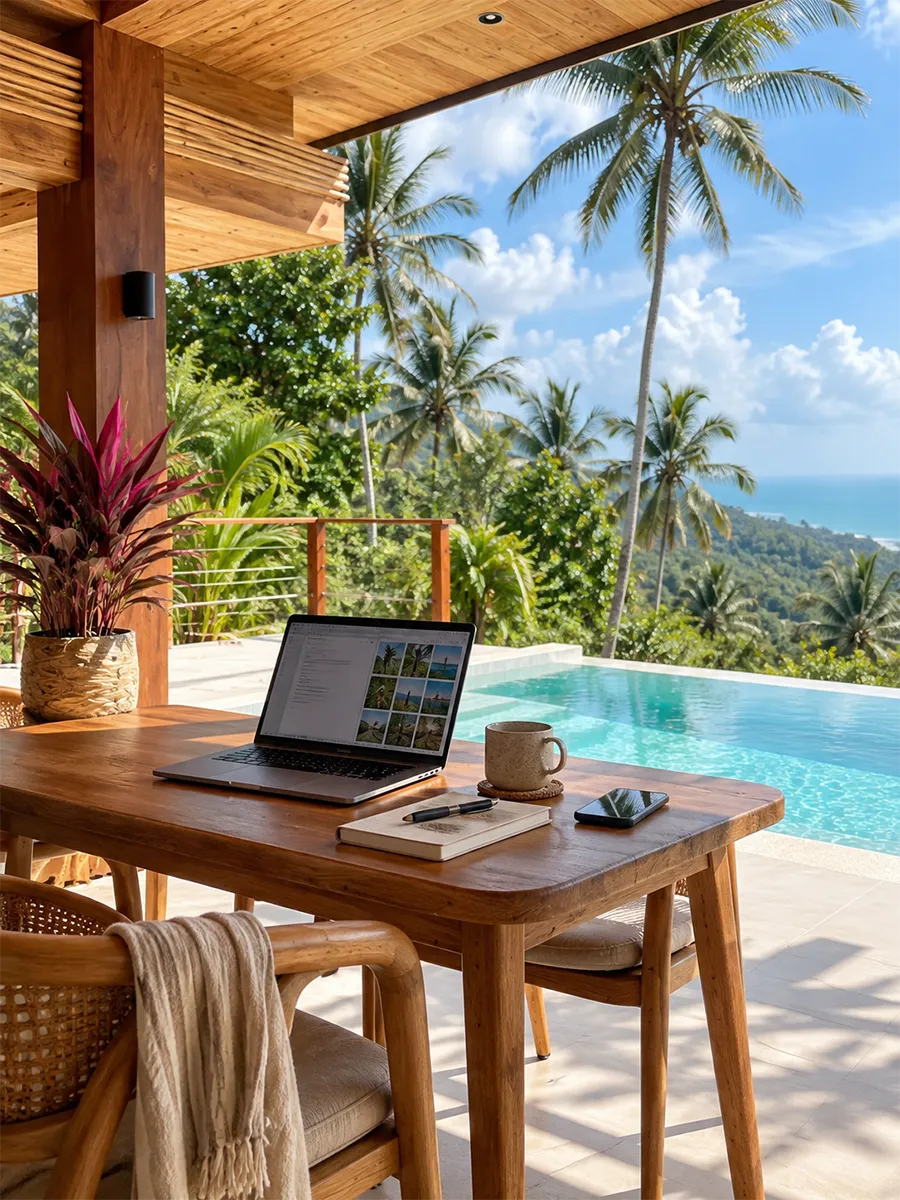
Koh Phangan has been attracting remote workers for several years. Some genuinely live this way for months at a time. Others are simply on holiday and want to remain connected enough that they do not have to disappear completely from their business or work.
These are two very different ways of travelling. You can perfectly well come to the island for ten days or two weeks without having the slightest intention of turning your holiday into a “workation”.
In a couple, one person might be completely on holiday while the other needs to work for an hour in the morning. A freelancer may have a few projects to keep an eye on. A business owner might want to check the numbers or deal with something urgent. In those situations, the aim is not to recreate an office in the tropics. It is simply about finding a balance.
On Koh Phangan, that balance comes quite naturally. Working for two hours does not feel quite the same when the day does not begin with a commute and end with another one. Once you close the laptop, you have already arrived.
Mornings Change Everything
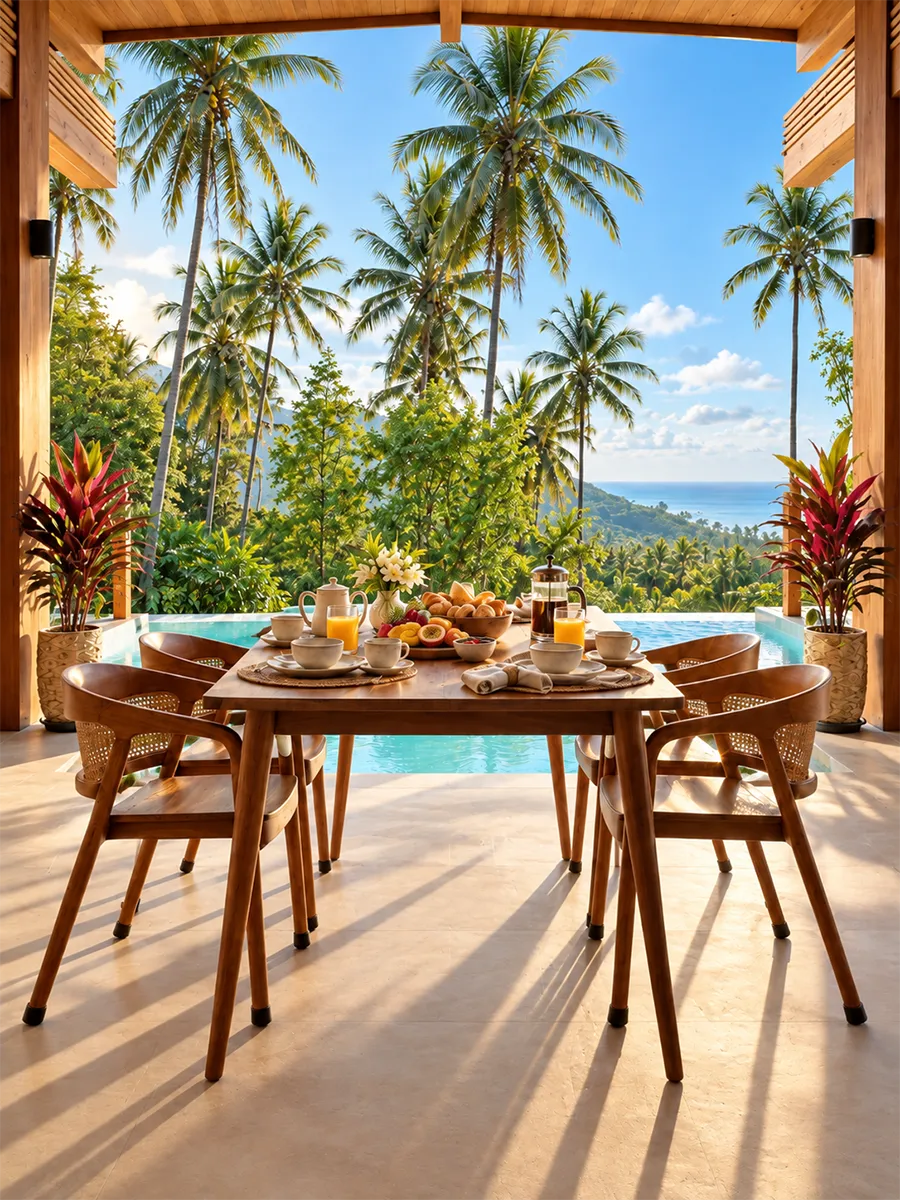
The first hours of the day are some of the most pleasant on the island. It is usually cooler, everything starts slowly and the morning light creates a very different atmosphere from the middle of the day.
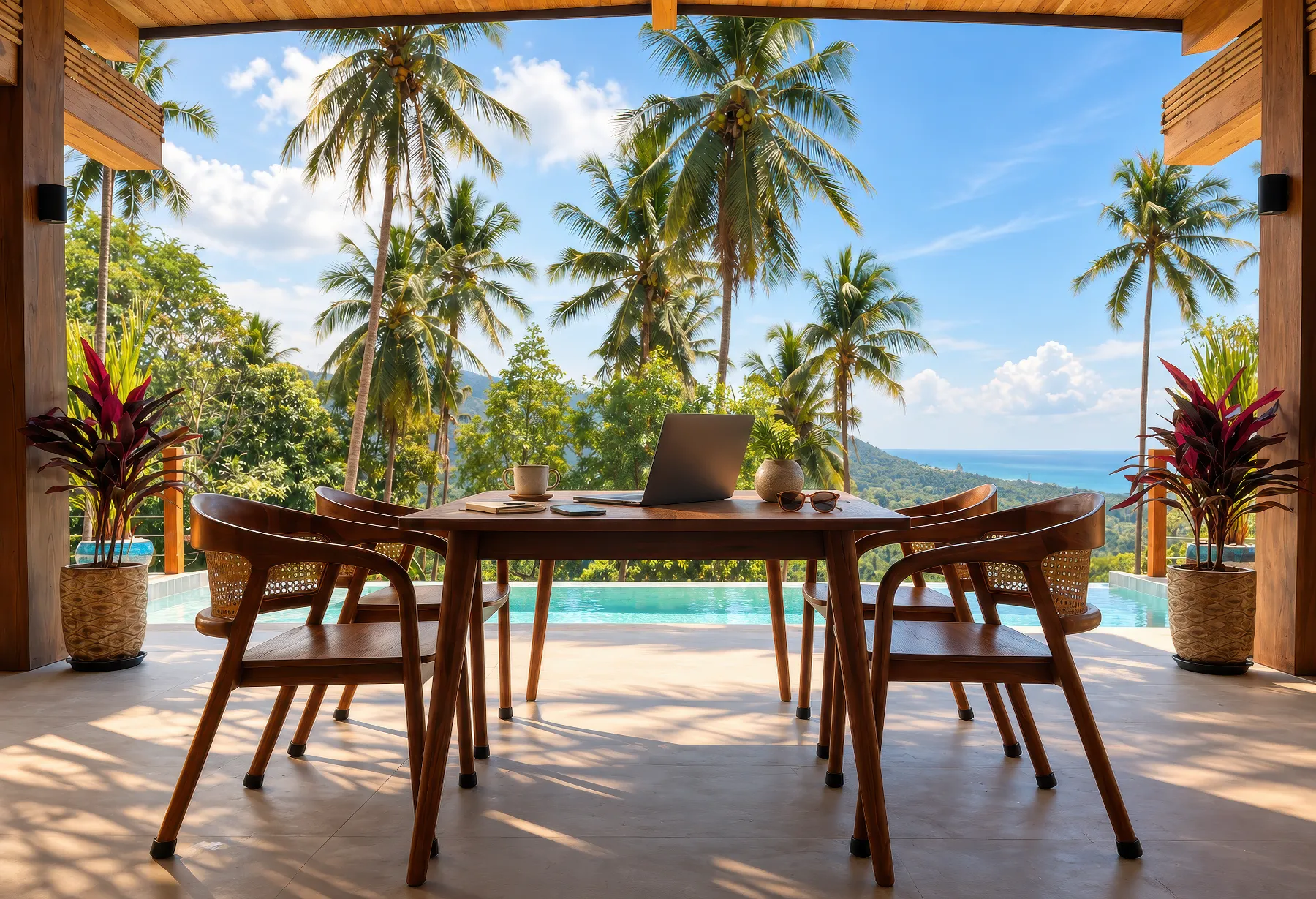
At Villa Altura, the east facing orientation gives those early hours a particular character. The light arrives early across the landscape, with the mountains in front of the villa and the sea in the distance. You can have breakfast, open the laptop for a while, then begin the rest of your day.
This rhythm works particularly well for activities that require a certain degree of independence. Writing, management, programming, creative work, accounting, emails, keeping track of a business or simply dealing with a few tasks that could not wait can easily fit into an hour or two.
The time difference with Europe is worth taking into account, however. Thailand is several hours ahead of Paris, London or Berlin. If your day depends on frequent meetings with European teams, those calls will often take place later in the day in Thailand.
For someone with more control over their schedule, that same time difference can actually be an advantage. For much of the Thai morning, Europe is still asleep. Fewer emails are coming in, the phone rings less and those first few hours can remain particularly quiet.
Koh Phangan is therefore not necessarily the perfect place to reproduce your normal office day exactly as it is back home. That may be precisely what makes it interesting.
An Island Far Better Connected Than You Might Expect
The first concern when considering working from a tropical island is often the internet. Will the connection actually be good enough?
On Koh Phangan, the answer often surprises people. Fibre internet now reaches a large part of the inhabited areas of the island, and mobile networks have developed considerably. Thai operators also continue to strengthen their infrastructure across Koh Phangan.
At Villa Altura, the main connection is fibre. Under normal conditions, we regularly measure speeds of around 600 Mbps. The exact figure can vary depending on the time of day and network conditions, which is completely normal for a real internet connection. But even with significant fluctuations, there is still more than enough capacity for most professional uses.
Video calls, cloud services, file transfers, website management and general online work use only a fraction of that bandwidth. For occasional work during your stay, going out to find a café purely for its internet connection is therefore rarely necessary.
What Happens During a Power Cut?
It is better to explain this reality than pretend it does not exist. Koh Phangan is still an island, and occasional power cuts can happen. When the villa loses electricity, the WiFi router naturally goes down with the rest of the electrical system. The fibre connection is therefore temporarily unavailable through the house WiFi.
But that does not usually mean losing every form of internet access. 4G and 5G coverage is now very good across many parts of Koh Phangan. Mobile phone towers have their own backup power systems, and the mobile network generally continues to operate during local power cuts. You can simply activate the hotspot on your phone and connect your laptop through 4G or 5G. For someone who needs to finish something or join an important meeting, this can make a real difference.
That does not mean anyone can promise a perfect connection twenty four hours a day. No accommodation, internet provider or mobile network can realistically guarantee that. But having both fast fibre and strong mobile coverage completely changes what remote work on the island looks like today.
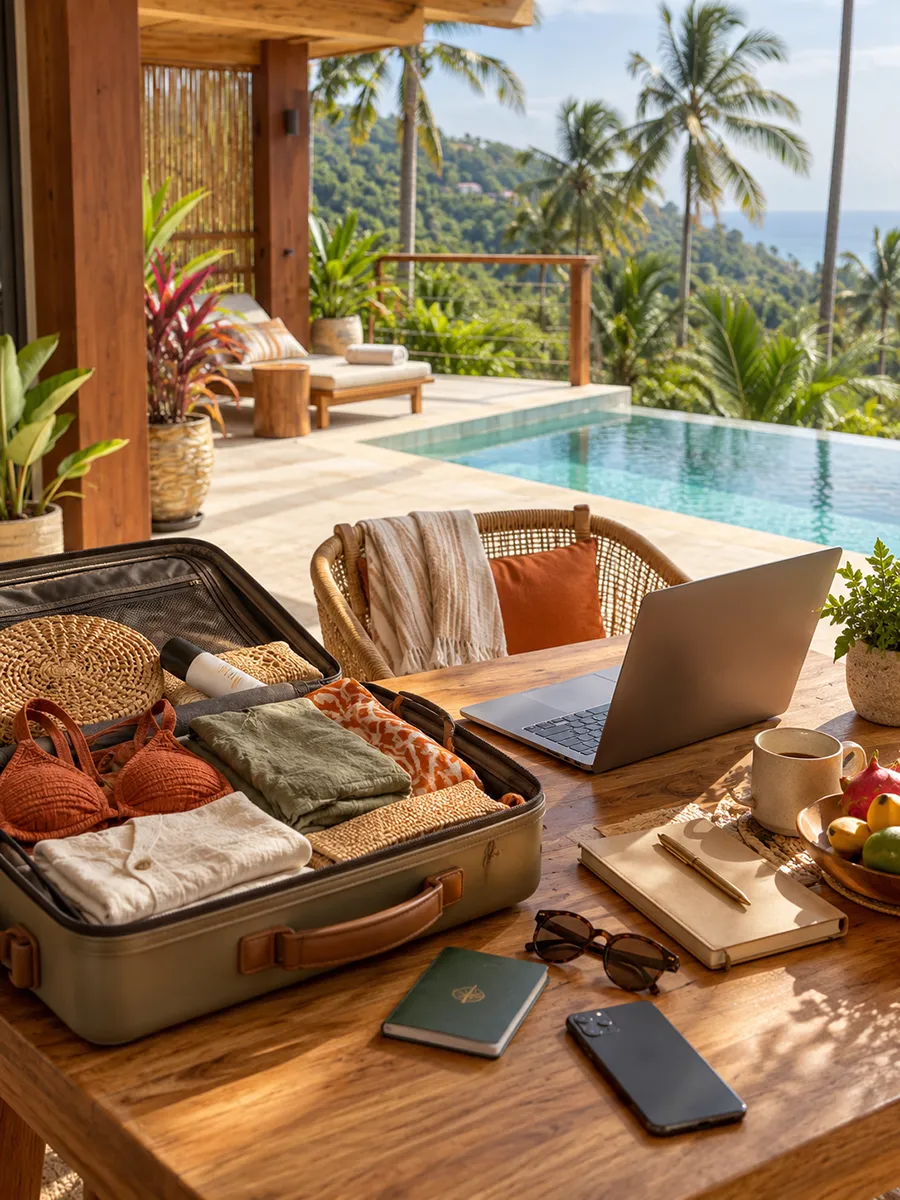
Ten Days on Holiday and Three Months of Remote Work Are Not the Same Thing
This is probably the most important distinction in the whole discussion. Someone who comes to Koh Phangan for ten days on holiday and opens their laptop from time to time is not in the same situation as a freelancer who decides to spend several months on the island while working every day.
In the first case, the trip remains centred around the holiday. You check a few emails. You see what is happening in your business. You monitor your investments. You deal with something urgent. You join a meeting that could not be moved. Work stays in the background — and that is exactly the kind of freedom that can make ten days away possible instead of five.
But when someone comes to Thailand with the genuine intention of working remotely for an extended period, the question of immigration status becomes much more important.
An Important Point to Know Before Going Through Immigration
Thailand significantly tightened immigration controls in 2026. The authorities announced stricter checks aimed at visa abuse and at travellers entering under a status that does not match the true purpose of their stay.
Since 15 September 2026, the 30 day visa exemption available to eligible nationalities is explicitly intended for tourism. The Thai government also states that travellers entering for another purpose should use the visa category that corresponds to their situation.
This has a very practical consequence for remote workers. Entering Thailand under a tourist visa exemption or other tourist status, then telling an immigration officer that the purpose of your trip is to come to Thailand to work online, may lead to further questioning and potentially a refusal of entry. Admission into Thailand remains at the discretion of immigration officers.
That does not mean hiding or inventing the purpose of your stay. Quite the opposite. The simplest rule is that the immigration status you use should match the genuine purpose of your trip.
A traveller spending a holiday on Koh Phangan who occasionally checks emails is not organising their stay in the same way as a freelancer moving to the island for three or six months with the intention of working every day. For that second profile, Thailand now offers a much more suitable option.
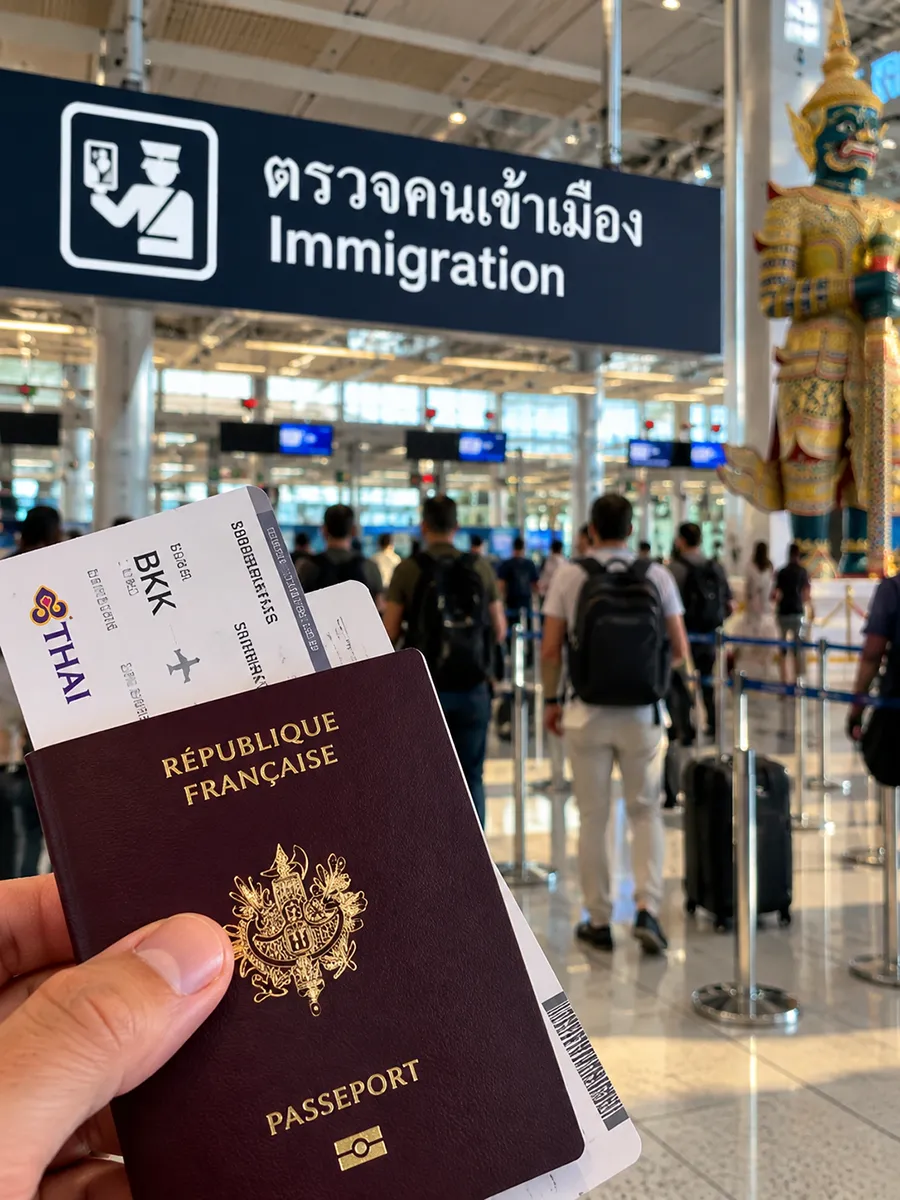
The DTV for People Who Really Want to Work from Thailand
The Destination Thailand Visa, usually known as the DTV, was created in part for digital nomads, remote workers and freelancers. It allows stays of up to 180 days per entry and is valid for five years with multiple entries. Official Thai documents explicitly include a “Workcation” category for digital nomads, remote workers and freelancers.
It therefore makes much more sense for someone who genuinely wants to spend a significant part of the year in Thailand while continuing to work remotely. On the other hand, it is not normally the kind of visa someone applies for simply because they are going on a ten day holiday with a laptop in their suitcase.
The application requires a proper file with professional and financial supporting documents. The exact conditions and fees can depend on the country from which the application is submitted. For someone planning to spend several months in Thailand, it is something worth looking into seriously. For someone who mainly wants to enjoy Koh Phangan for a few days or a few weeks while keeping an occasional eye on work, the situation is very different.
In every case, immigration rules can change. Before planning a stay built around remote work, it is best to check the latest requirements directly through the official Thai eVisa portal or the relevant Thai embassy.
Do You Really Need a Coworking Space?
Koh Phangan now has several coworking spaces. For some people, they make perfect sense — someone working six or eight hours a day may appreciate having a proper desk, a professional routine and the chance to meet other people who also work remotely.
But that is not necessarily what someone wants when they simply need to stay connected to work during a holiday. If the aim is to spend an hour or two dealing with a few tasks in the morning before enjoying the island, leaving the villa, getting on a scooter and travelling somewhere else just to find a desk can feel almost contradictory.
A stay that includes a little remote work does not necessarily require an ergonomic office chair, several screens and a complete office setup. What matters more is having somewhere quiet, a good connection and enough space for work not to take over the holiday.
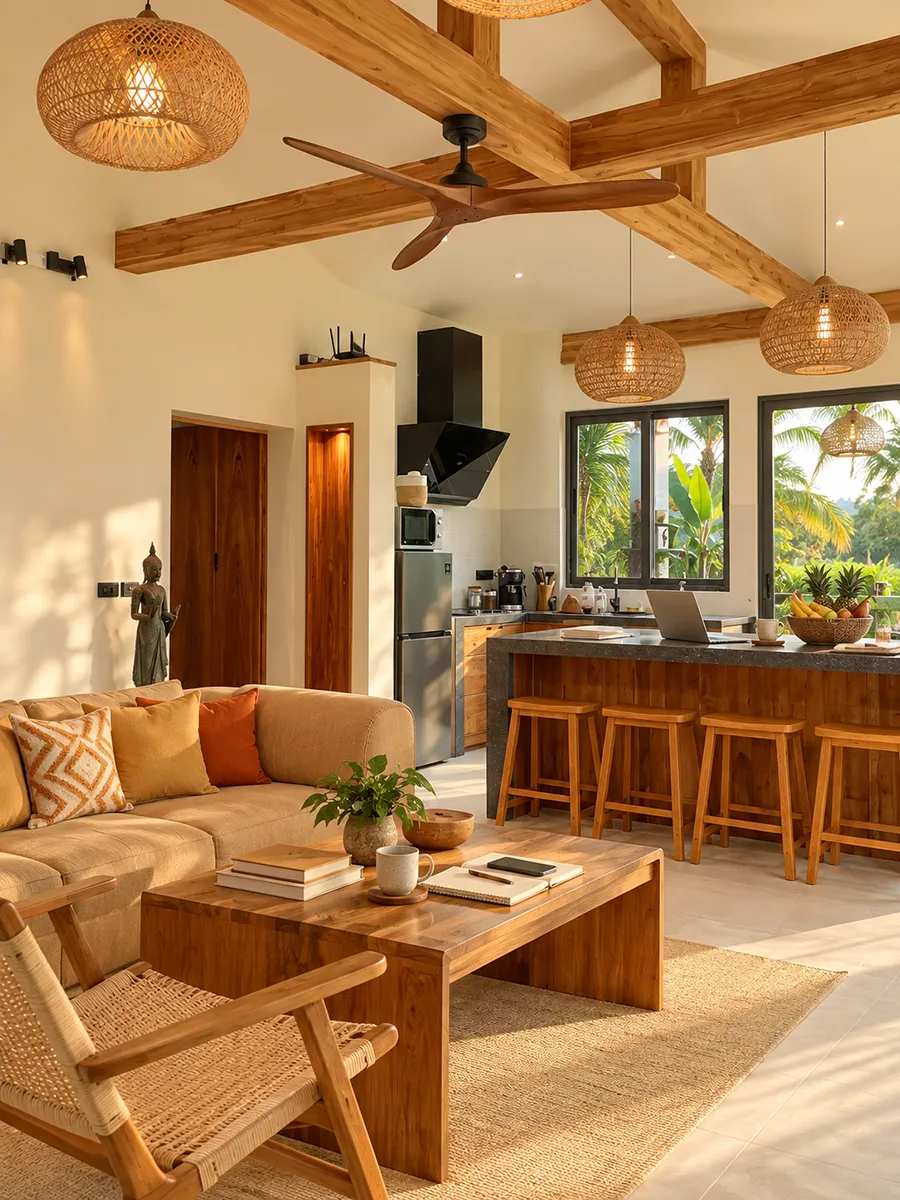
What This Changes at Villa Altura
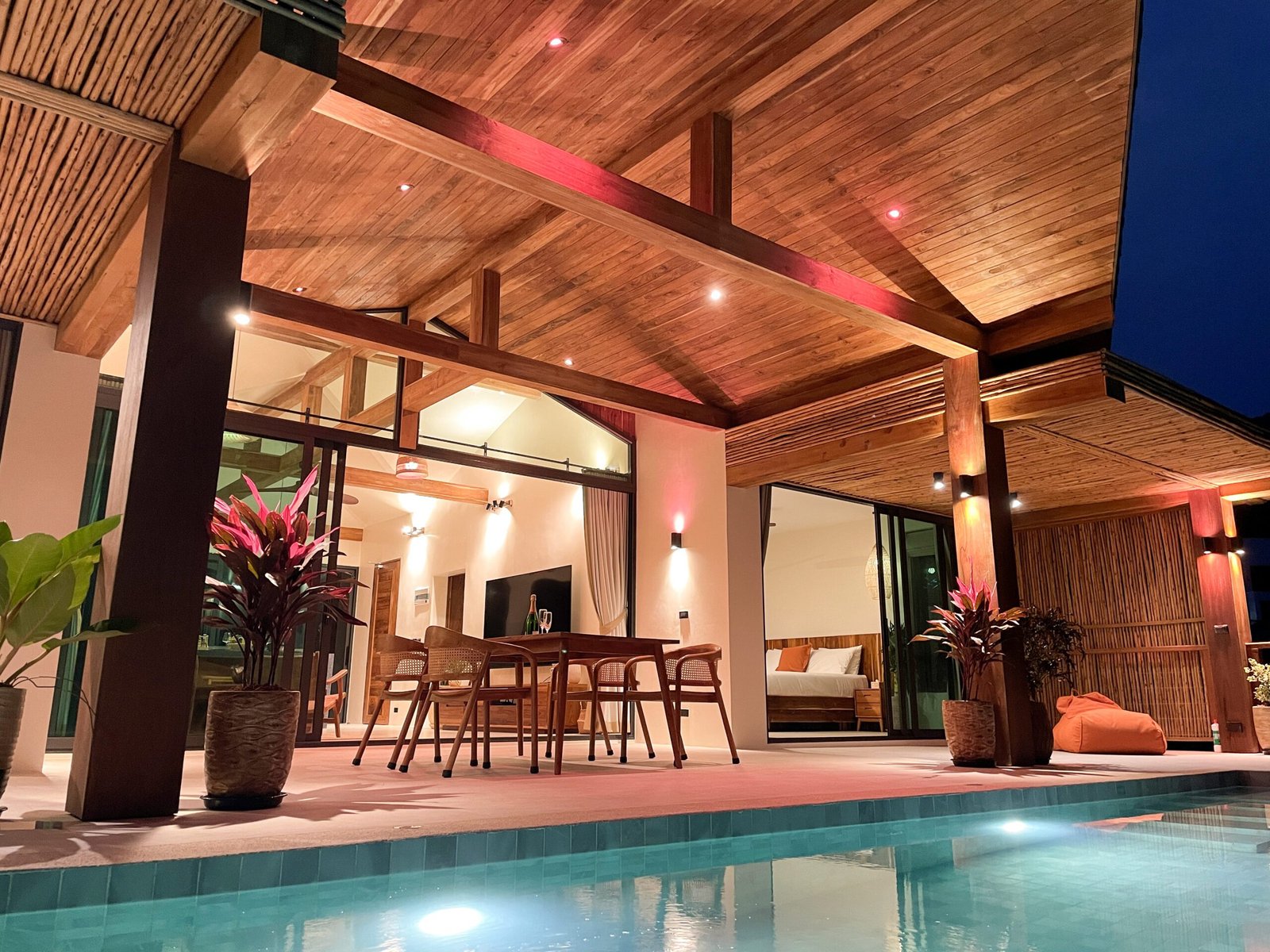
Villa Altura was not designed as a coworking space. It is first and foremost a place to stay and enjoy Koh Phangan. But several features naturally make it comfortable for guests who want to remain connected to their work.
The large air conditioned living room provides a comfortable place to work during the hotter hours of the day. In the morning, the terrace offers another option, with the mountains in front of you and the sea in the distance. The fibre connection means there is no need to go elsewhere just to find reliable internet. And with two bedrooms and several separate areas, a couple can continue enjoying the villa normally even if one person needs some privacy for a meeting.
Above all, there is something no technical specification can really measure. When the work is done, there is nothing to pack away before heading back to the hotel. You simply close the laptop. The pool is a few metres away. The scooter is outside. The day can begin.
Staying Ten Days Instead of Five
This may ultimately be the greatest advantage of being able to work remotely while travelling. Not turning your holiday into an office day with a better view. But making trips possible that would otherwise have had to be shorter.
Koh Phangan is particularly suited to stays where you have time to slow down. Four or five days are enough to discover part of the island. Ten days or two weeks are enough to start understanding its rhythm.
You gradually stop feeling the need to visit a different beach every morning. You return to a restaurant you enjoyed. You discover small roads you would never have taken during a shorter stay. Some days are spent almost entirely at the villa without ever feeling that the day was wasted.
For some people, a few hours of work can simply add several days to the trip. For others, it might mean an extra week. And for those with genuine professional freedom, it can turn into several weeks or several months, with an organisation and visa that properly suit that way of living.
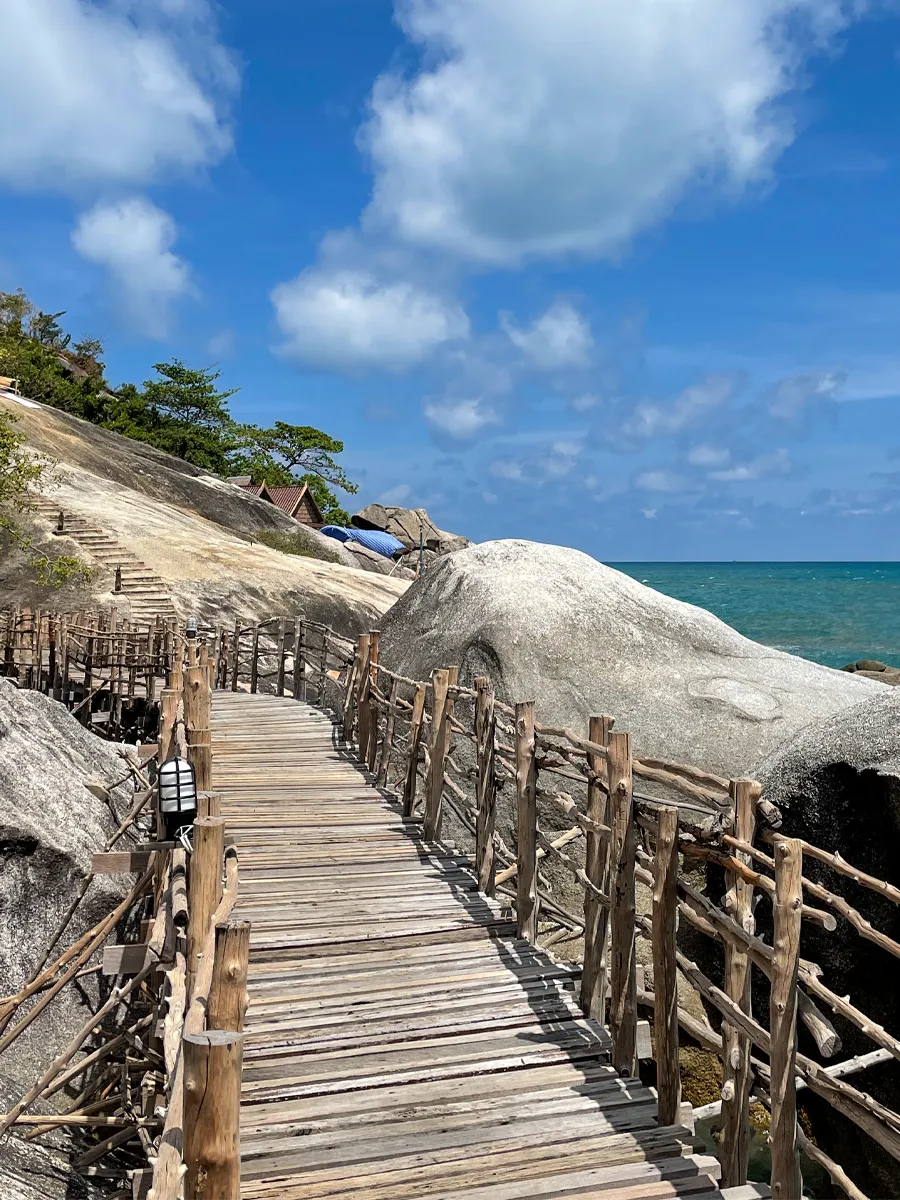
Perhaps the Luxury Is Not Never Having to Work
The traditional idea of a holiday often means switching off completely. And that is obviously wonderful when it is possible. But for many freelancers, entrepreneurs and simply people whose work gives them greater geographical freedom, freedom can take another form.
Being able to leave without every day away from home becoming a problem. Answering a few emails in the morning. Keeping an eye on your business. Joining a meeting when necessary. Then closing the laptop and realising that you are still on Koh Phangan.
In that situation, remote work does not necessarily take anything away from the trip. It may simply mean you do not have to go home quite yet.